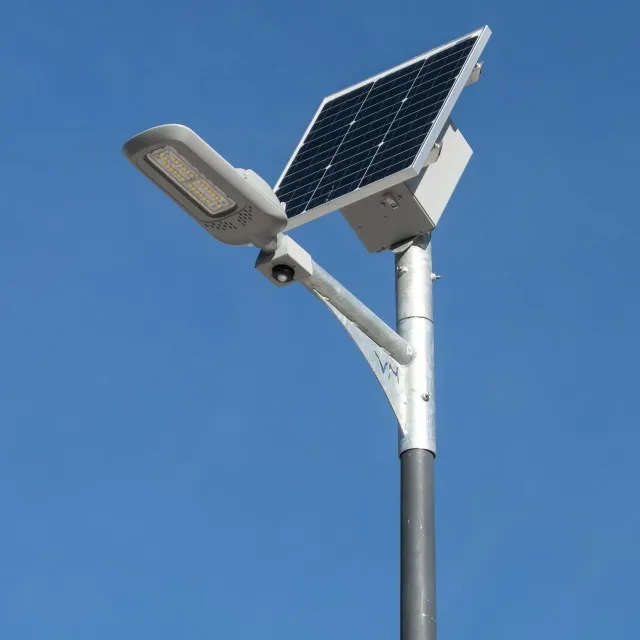
Solar street lighting can illuminate roads, pathways, campuses, parking areas, residential layouts, and industrial premises without depending entirely on a conventional lighting circuit. However, buyers comparing Solar Street Lights in Pallavaram should evaluate the complete system rather than judging it by panel size or advertised wattage alone.
A solar street light must collect energy during the day, store it safely, and provide the required illumination at night. Performance therefore depends on how well the panel, battery, controller, luminaire, pole, and installation work together.
Define the Lighting Requirement
Begin by clarifying what the system needs to illuminate.
Important questions include:
- Is the location a road, walkway, compound, or parking zone?
- How wide is the area?
- What mounting height is planned?
- How many hours of night operation are required?
- Is full brightness needed throughout the night?
- Are there trees, buildings, or structures that create shade?
- Is motion-based dimming acceptable?
A pathway may need a different beam distribution from a wide internal road. Fixture wattage alone does not reveal whether the light will reach the required surface effectively.
Compare Integrated and Separate Systems
Integrated solar street lights generally combine the panel, battery, controller, and LED unit into a compact assembly. They can simplify installation and create a cleaner appearance.
Separate systems use individually mounted components. They may allow greater flexibility in orienting the panel and selecting component capacity, but they require additional cabling and installation planning.
The right configuration depends on site conditions, maintenance preferences, required autonomy, and budget.
Examine Battery Specifications
The battery stores energy for night-time operation. Buyers should review battery chemistry, rated capacity, expected cycle life, allowable depth of discharge, temperature suitability, and warranty terms.
Capacity should be calculated according to actual load and operating time. An undersized battery may provide acceptable illumination initially but struggle during longer nights, cloudy periods, or after ageing.
The battery enclosure and mounting arrangement should also discourage water entry, overheating, and unauthorised access.
Check the Solar Panel Position
A solar panel needs adequate exposure to sunlight. Shade from trees, nearby buildings, billboards, or future construction can reduce energy generation.
The installation plan should examine:
- Daily sun exposure
- Panel orientation
- Tilt angle
- Dirt accumulation
- Bird activity
- Cleaning access
- Wind exposure
- Structural stability
Pallavaram’s urban development means surrounding obstructions should be assessed carefully rather than assuming every open-looking location receives uninterrupted sunlight.
Understand Lighting Autonomy
Autonomy refers to how long the system can operate without receiving a full solar charge. The requirement depends on local weather, operating hours, battery capacity, and dimming profile.
Some systems operate at full brightness during busy evening hours and dim later at night. A motion sensor may increase brightness when movement is detected. These controls can conserve stored energy, but the operating profile must suit the site’s safety needs.
Review Pole and Foundation Requirements
The pole must support the luminaire and solar equipment safely under outdoor conditions. Height, material, coating, foundation design, wind loading, bracket alignment, and earthing require attention.
Civil work should be based on site conditions. Weak foundations or incorrect anchor arrangements can create serious safety risks.
Ask for Clear Documentation
Before purchasing, obtain information on component ratings, warranty coverage, expected operating profile, installation scope, and maintenance requirements.
Shine Agencies can help property owners, contractors, and facility teams assess solar lighting options according to their intended application. For installations in Pallavaram, Chennai, a dependable system begins with a realistic site survey and coordinated component sizing not with the selection of an isolated light or panel.
Keywords