A BLDC fan improves perceived comfort by moving air across people, but it does not lower room temperature or replace air-conditioning. By matching fan size, placement, controls and operating schedule to each office zone, you can identify where the investment saves energy and where it creates noise, drafts or unnecessary cost.
Key takeaways
- Match fan coverage to occupied zones, not floor area alone.
- Keep blades clear of beams, lights, partitions and tall furniture.
- Check ceiling height, heat, humidity and salt exposure before installation.
- Use airflow to raise the HVAC setpoint, then compare measured energy use.
Match the fan to the office zone, not just the room size
A BLDC super fan for office in Chennai works best where people sit for long hours: open-plan desks, reception counters, cafeterias and occupied cabins. It moves air across skin, improving comfort and allowing a higher air-conditioner setpoint; it does not lower room temperature or replace cooling.
| Zone | Suitable fan size | Selection point |
|---|---|---|
| Open-plan workstations | 56-inch | Use for broad, obstruction-free coverage; columns, high partitions and lights can make a 56-inch sweep ineffective. |
| Reception or cafeteria | 56-inch | Choose it for large occupied areas with high ceilings, provided the blade path clears signs, lights and ductwork. |
| Meeting room | Standard 48–52-inch | This suits regular seating and moderate operating hours. A 56-inch model can create uncomfortable drafts in a compact room. |
| Private cabin | 36-inch | Use for one or two occupied desks where a larger fan would overblow the space. |
| Corridor | Usually none; 36-inch only in a wide occupied passage | A ceiling fan rarely helps a narrow transit route and can disturb doors, signage or walking traffic. |
| Small site office | 36-inch or standard 48–52-inch | Match the size to desk density and ceiling height, not the room label. |
Treat these sizes as starting points, not guarantees. A short-hours meeting room may not justify a BLDC premium, while an open-plan zone running throughout the workday has a stronger case. Switch fans off in empty areas unless they are needed for destratification or equipment cooling.
Place fans around occupied desks and obstructions
Start with desk locations, not the ceiling grid. A fan should move air through the occupied zone and around partitions; a clear circle on the plan proves nothing. A super fan for commercial office use earns its place when people at their desks receive steady, moderate airflow rather than a high-speed blast at one chair.
- Align the fan with a desk row or shared work zone, keeping its centre between occupants where possible. Aim airflow across people, not directly into one person’s face or neck.
- Keep tall partitions, storage units and columns outside the main airflow path. If an obstruction blocks the sweep, move the fan toward the open side instead of increasing speed.
- Start adjacent fan centres at roughly 1.5 times the blade diameter, then adjust after an airflow check. Tighter spacing at low speed is preferable to widely spaced fans that leave stagnant pockets.
- Leave unoccupied desk zones switched off unless you need destratification or equipment cooling. Group fans by thermal zone so one control does not run the whole floor.
Test the layout during working hours with the furniture, lights and partitions in place. A lightweight ribbon at seated head height will reveal both dead zones and uncomfortable jets; if one desk flutters while the next has no movement, reposition the fan before specifying more units.
Fans improve evaporative comfort, not room temperature, so coordinate their coverage with the air-conditioning supply.
Check Chennai conditions before fixing the fan
A mineral-fibre tile or suspended linear ceiling is not a mounting point. Before ordering a bldc super fan in chennai, inspect the ceiling and follow this installation procedure:
1. Check the ceiling build-up. Identify the slab, beam or structural channel above the false ceiling, then specify a drop length and bracing arrangement that keeps vibration out of the tiles and grid.
2. Verify the fixing capacity. An installer must anchor the fan to the building structure or to an engineered support, not to a T-grid. Check clearance from lights, ducts, sprinklers and raised cable trays before selecting the downrod.
3. Inspect the environment. Near open windows, parking levels, rooftops or the coast, require corrosion-resistant exposed hardware, protected terminals and a cleaning plan for salt and dust. Monsoon moisture also demands sealed, accessible electrical connections. A standard indoor model is not automatically suitable there.
4. Test the electrical supply. Confirm the circuit voltage, earthing, protective device, isolator and controller compatibility. Record nuisance trips, voltage dips and generator changeovers; add suitable surge or voltage protection when the site demands it.
Do not specify flame-proof construction merely because the motor is enclosed. Use it only inside a documented hazardous-area classification with matching certification. In an ordinary office, choose controllable speeds and switch fans off in unoccupied zones; airflow improves comfort but does not remove heat or replace air-conditioning.
Use fans with HVAC systems and calculate the real saving
Pair fans with AC when occupied desks need air movement and the HVAC system already controls heat and fresh-air requirements. A ceiling fan does not cool the room or replace ventilation; it improves perceived comfort by moving air across skin.
Use low, controllable speeds at occupied desks, and switch fans off in empty zones unless they support destratification or equipment cooling.
Compare equal delivered airflow, not motor labels. A high-airflow BLDC model is not a saving if it needs maximum speed or extra units to cover the same desks.
| Fan type | Example input | Monthly energy at 10 hours/day, 26 days | Monthly cost at ₹10/kWh |
|---|---|---|---|
| BLDC | 35 W | 9.1 kWh | ₹91 |
| Induction motor | 75 W | 19.5 kWh | ₹195 |
The example saving is ₹104 per fan each month, or ₹1,248 per year. Replace both wattages with measured input at the selected speed, then use your tariff: (conventional watts minus BLDC watts) × operating hours ÷ 1,000 × tariff. Include purchase premium, controls and service in the payback calculation.
An energy efficient office fan in Chennai delivers its strongest payback in open-plan areas running through the working day. A short-hours meeting room may not recover a higher purchase cost quickly.
In an air-conditioned office, test whether fan airflow lets you raise the thermostat without complaints; account for motor heat, moving papers and drafts before changing the setting. Request wattage-versus-speed, airflow and sound data.
Specify the complete commercial-office fan package
Put the purchase specification in writing before comparing prices. A super fan for commercial office use is only suitable when its airflow, controls, mounting and after-sales support match the working pattern.
- State airflow data and wattage at each speed, not just a “super fan” label. Request sound level in dB(A), measured distance, and the highest acceptable noise level for cabins, open-plan desks and meeting rooms.
- Specify wall control or building-management-system (BMS) integration, speed memory, local override, timer or occupancy control, and grouping by thermal zone. A remote-only fan gets lost in meeting rooms and prevents facilities teams from enforcing schedules.
- Require structural mounting above a false ceiling. Fix the bracket to the slab or an engineered support, never to mineral-fibre tiles or a ceiling grid; specify drop length and bracing to prevent vibration.
- Record the permitted supply-voltage range, surge protection, restart behaviour after an outage, and replacement availability for the controller, Hall sensors, receiver and power supply.
- For coastal, semi-open or parking-level areas, specify corrosion-resistant exposed hardware, sealed electrical connections and a salt-and-dust cleaning schedule.
A BLDC super fan for office in Chennai should run only during occupied hours unless it serves destratification or equipment cooling. Ask Shine Agencies to quote controller warranty separately from motor warranty and provide the parts lead time. Use wattage-versus-speed and airflow data to judge payback: long-hours open offices benefit more than short-use meeting rooms.
Related products
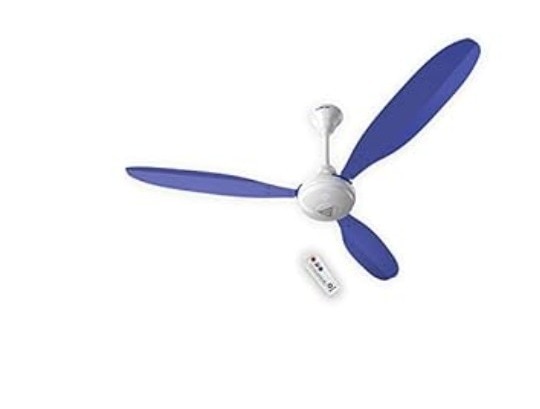 | Ceilingfan ₹5090 Super X1 is our award winning, high speed super energy efficient ceiling fan that is suitable for personal spaces at work and home. View product → |
 | X1 ₹3600 Every 1Degree higher setting on your AC, Saves you 5% on its electricity, set your AC at 27 degree celsius and choose the Duo cool mode on the mode... View product → |
Frequently asked questions
Which office zones suit a BLDC super fan in Chennai?
Open-plan desks, reception counters, cafeterias and occupied cabins benefit most because people remain in those areas for long periods. Select coverage by occupied zone rather than room size alone.
Where should you place fans around desks and office obstructions?
Position fans to move air across occupied desks while clearing beams, lights, partitions and tall furniture. Check the airflow path from the fan to seated users before fixing it.
What Chennai conditions should you check before installing an office fan?
Check ceiling height, heat and humidity, salt exposure near the coast, ventilation, mounting strength and the fan’s suitability for the installation environment.
How do BLDC fans work with office HVAC systems?
Fans improve perceived comfort by moving air across skin; they do not lower room temperature. Pair them with HVAC, test a higher setpoint, and compare actual electricity use before and after the change.
Related products
 | BLDC Ceiling Fan ₹5060 Super J1 is our 36 inch blade span, super energy efficient ceiling fan that consumes only 25 W. View product → |
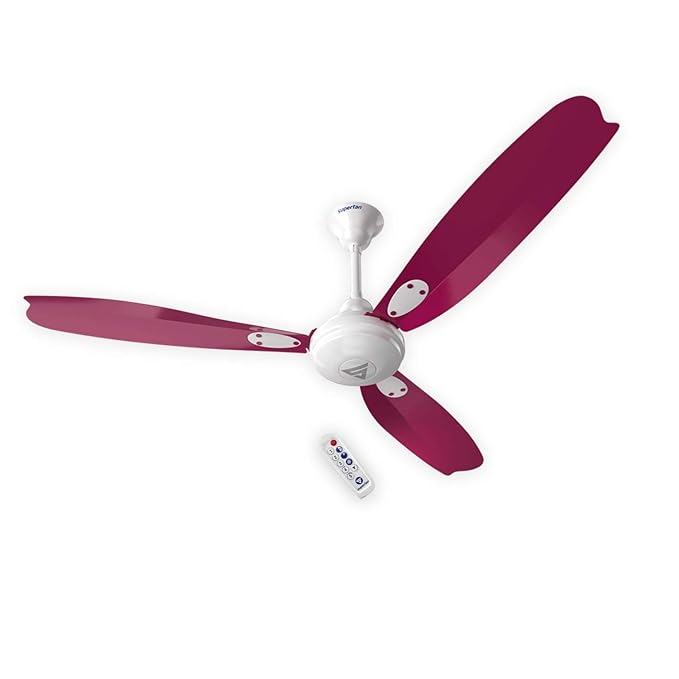 | BLDC Ceiling Fan ₹5500 Super A1 is our flagship super energy efficient ceiling fan that has complete features. View product → |
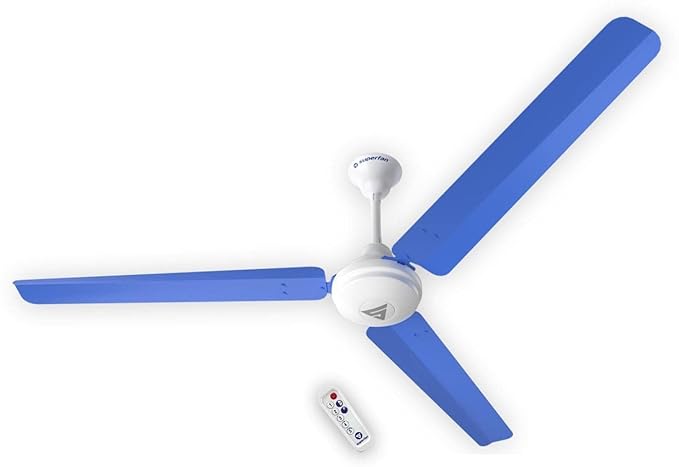 | BLDC Ceiling Fan ₹5250 Super V1 is our large super energy efficient ceiling fans with blade span of 56 inches suitable for large spaces. View product → |
 | BLDC Ceiling Fan ₹12500 The Super Q Duocool ceiling fan is packed with a variety of innovative features designed to enhance comfort, connectivity, and efficiency. View product → |
Keywords